
In 1989, McMaster University Political Science Professor Peter J. Potichnyj (1930-2026) conducted six interviews with Allied Second World War veterans for UCRDC. The interviews focused on the remarkable experiences of Dutch officers escaping from Stalag 371, a German prisoner-of-war camp in what is now Ivano-Frankivsk in western Ukraine, and was then (1943-44) Stanislau in Distrikt Galizien of the General-Gouvernement.
The interviewees were then junior 2nd Lieutenants, swept up in the 1942 German internment and deportation operation targeting all professional Dutch officers. By the time our interviews were recorded in 1989, these men had retired from the most senior ranks of the Dutch military, up to and including Major-General.
Speaking with Professor Potichnyj, the officers gave detailed accounts of their various escapes from the camp and their journey to seek safety in Hungary. (Though an ally of Nazi Germany, Hungary was not formally in a state of war with the Netherlands, and so was seen as a safe haven.)
Along their journey, the officers were aided by various members and detachments of the Ukrainian Insurgent Army (UPA). The Dutch officers ended up discovering more about a region about which they had previously had little to no knowledge, and about its inhabitants’ desire and ongoing fight for freedom.
This is not only a story pertinent to Ukraine, however, but also to the Netherlands, as our interviewees speak about what has been described as the largest Dutch breakout from a prisoner-of-war camp anywhere in the world during the Second World War.
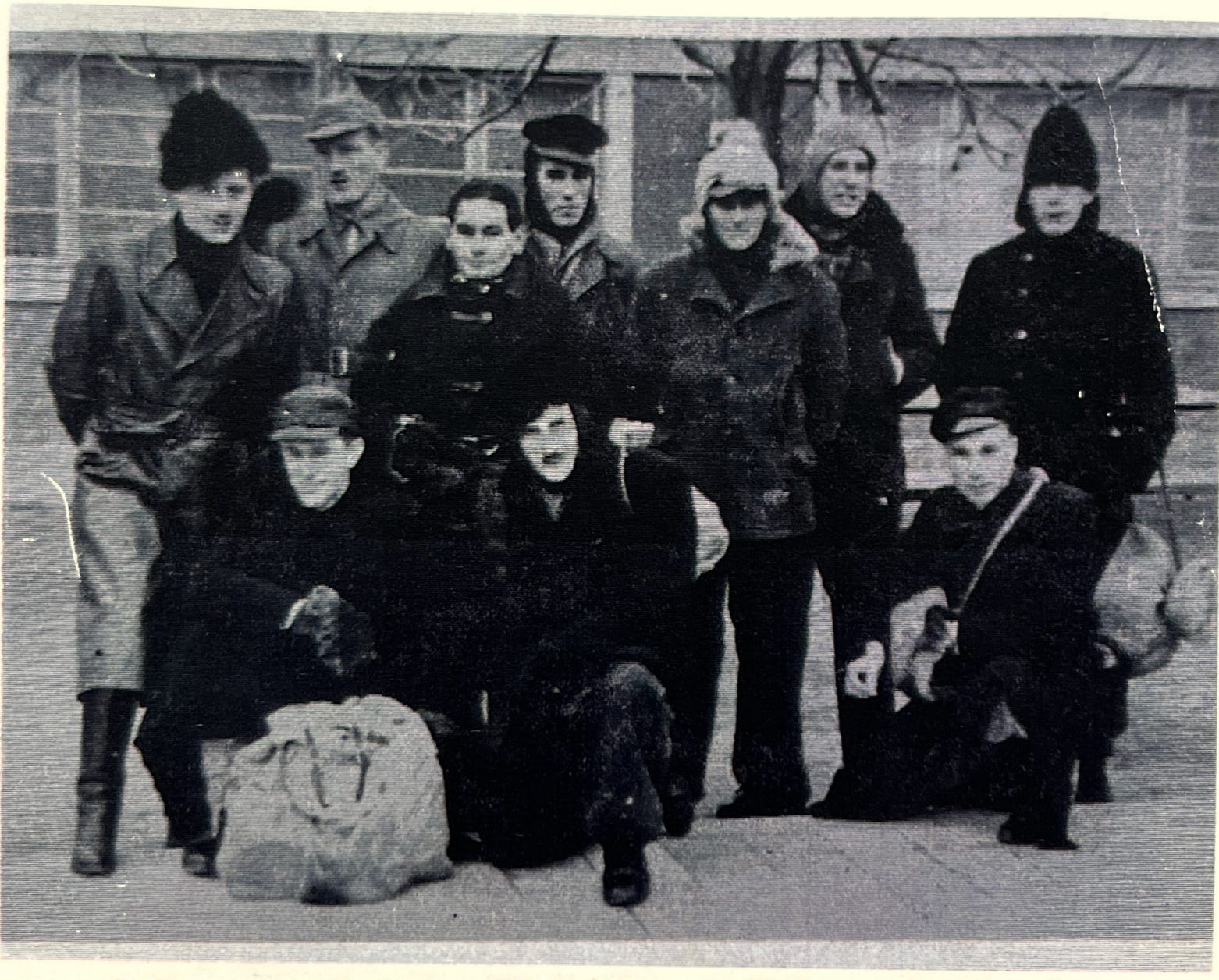
The UPA has gained a place of honour in the contemporary Ukrainian official historical narrative, though its role remains contested in the historiography of the period. Our video presents one facet of this history, for which we have over six hours of eyewitness testimonies from Allied officers. The officers’ experiences and testimonies allow us a window into the complexities of rationale, risk, and the overarching goals of each individual and group. They show the risks that various groups of people faced in pursuit of their individual and collective senses of freedom, honour, agency, and duty.
The first episode of this two-part series introduces the background to the escape and the circumstances that brought these Dutch officers into contact with the UPA. It also encourages a deeper look into some of the unique transnational and interethnic testimonies housed at UCRDC.
Our videos are also a gesture of respect for the late Professor Peter J. Potichnyj, who was not only an outstanding scholar, but also an assiduous researcher, collecting and donating to the University of Toronto a Collection on Insurgency and Counter-Insurgency in Ukraine: https://discoverarchives.library.utoronto.ca/downloads/peter-potichnyj-collection-on-insurgency-and-counter-insurgency-in-ukraine.pdf. He was also a benefactor of UCRDC.
I'm very glad that I clicked on this video. I nearly didn't.
Thank you for these archives.